Material Processing Ecosystem

Powering Every Stage with John Deere Engines

A technical guide for material processing, quarrying, waste recycling and mobile equipment decision-makers.

Modern material processing operations demand more than raw horsepower. From crushing and screening through to washing, recycling and biomass applications, every stage of the process flow places different demands on the powertrain.

This whitepaper explores how matching engine performance to real-world duty cycles can improve uptime, fuel efficiency and long-term operational reliability.

Barrus + John Deere industrial engines for mobile applications.
Process Overview

Powering Every Stage of the Process Flow

Material processing is not a single application. It is a continuous ecosystem made up of interconnected stages, each placing different demands on the engine and powertrain.

The diagram below highlights the key stages of the process flow and the John Deere engine platforms commonly suited to each application.
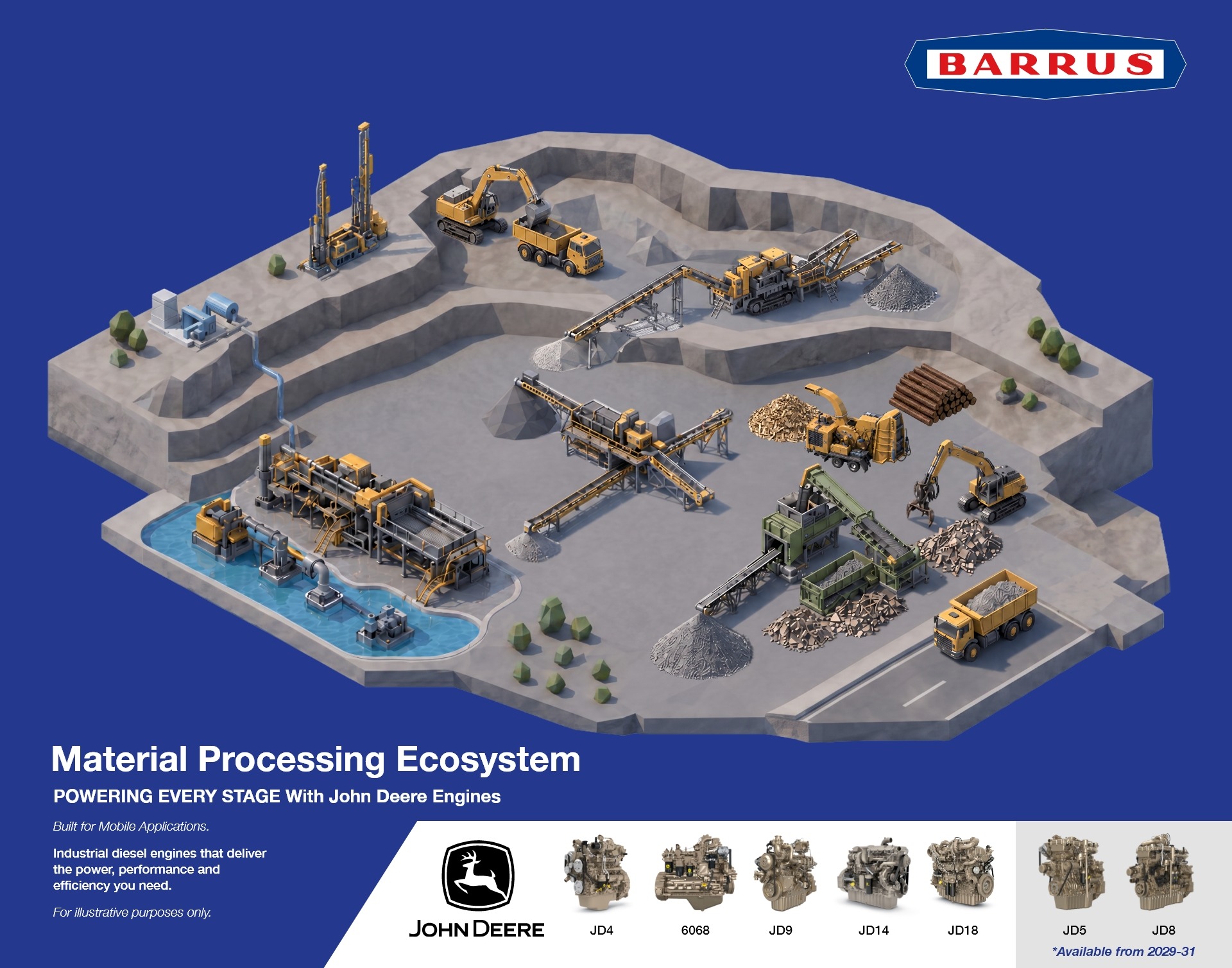
From drilling and blasting through to biomass processing and recycling, selecting the correct engine platform is critical to maintaining uptime, efficiency and operational reliability.

The Challenge

Engine Selection Isn’t
Just About Horsepower

Across material processing operations, industrial diesel engine selection is often driven by peak horsepower requirements rather than the reality of how machines actually operate day to day.

In practice, applications operate under a combination of:

  • Continuous-duty loads

  • Transient torque spikes

  • Variable operating conditions

  • Irregular material flow

When engines are not correctly matched to these conditions, the impact can be significant.

Overspecified engines increase fuel consumption and operating cost, while underspecified systems struggle under peak demand, reducing throughput and increasing mechanical stress across the machine.

This whitepaper examines how power demand changes across the full process flow — and why application-based power optimisation is becoming increasingly important across quarrying, crushing, screening, recycling and mobile processing operations.

When power is correctly matched to the application:

  • Long-term operating costs become more predictable

  • Fuel efficiency improves

  • Uptime increases

  • Mechanical stress reduced

This whitepaper explores how OEMs and operators can optimise powertrain performance across every stage of the material processing ecosystem.

Technical Foundation

Matching Power to Duty Cycle

Effective engine selection requires more than simply choosing the highest output available.

Understanding the difference between transient and steady-state demand is essential when selecting the correct power solution.

Applications

Real-World Material Processing Applications
Application 1

Drilling, Blasting & Conveying

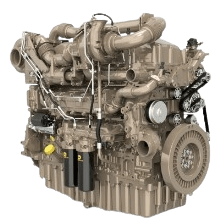
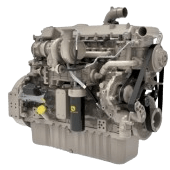
Applications at the beginning of the process flow require consistent torque over extended operating periods. Engines such as the JD14 are designed to deliver stable performance in continuous-duty environments where productivity and reliability are critical.

Application 2

Crushing Operations

Primary and secondary crushing introduce sudden transient load spikes, heavy shock demand and high vibration conditions. Platforms such as JD18 and 6068 are engineered to maintain throughput under these extreme operating environments.

Application 3

Screening & Sizing

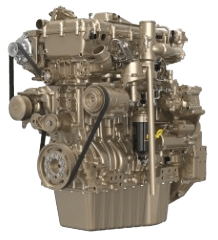
Screening and conveying applications operate under variable but moderate load conditions. The JD4 platform provides efficient long-duration performance with low fuel consumption and stable output under changing material flow.

Application 4

Washing & Pumping

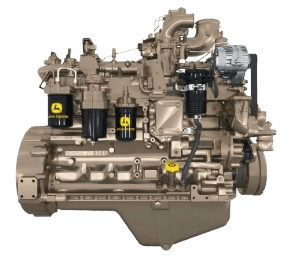
Water-intensive applications require stable, efficient power over long operating periods. JD4 and JD5 platforms are designed for reliable operation in abrasive and corrosive processing environments.

Application 5

Recycling & Waste Processing

Irregular materials and cyclic load profiles place unique demands on the powertrain. JD9 engines provide the torque, durability and flexibility required for modern shredding and waste processing applications.

Application 6

Green Waste & Biomass

Remote environments and debris-heavy applications demand rugged durability and dependable torque delivery. JD8, JD9 and JD14 platforms are engineered to support continuous operation in demanding biomass environments.

  • Power matching across the process flow
  • Transient vs steady-state load management
  • Avoiding overspecification and underspecification
  • Improving fuel efficiency and uptime
  • Selecting the right John Deere engine platform for each application

Get The Guide

Download the Technical Whitepaper

The Material Processing Ecosystem whitepaper provides a practical, application-led guide to powertrain optimisation for demanding material processing environments.

Designed for OEMs, quarrying operators, recycling businesses and mobile equipment manufacturers, the guide offers insight into how powertrain optimisation can improve long-term operational performance.

Why Barrus

Why Barrus Industrial Sector?

Barrus combines sales and distribution, technical service support, engine integration advice and after-sales parts supply in partnership with John Deere.

Our role is not simply to supply engines, but to ensure power systems perform effectively in real-world conditions.

Working closely with OEMs across quarrying, crushing, screening and mobile applications, Barrus provides:

This ensures OEMs receive a complete, end-to-end power solution tailored to the operational demands of material processing environments.